

How to Plan an Office Christmas Party Running Order
Most Christmas party schedules look straightforward until the evening starts. The first guests arrive while colleagues are still travelling. Dinner runs a little later than expected. Then, as the last award is handed out, the DJ and the entertainment team are both ready to begin. A good running order gives each part of the evening its own space and lets the organiser see what can move if timings change.
Start with the moments that have a fixed time, then plan how guests will move between them. The approach is much the same whether you’re booking a London hotel for a formal dinner or bringing a smaller team together for games and drinks.
Start With the Times You Have Already Agreed
Ask the venue for the earliest supplier access, the time guests can enter and when the room must be cleared. Confirm the catering schedule, especially for a sit-down meal where a late start can affect several courses. If your party has an awards presentation, find out whether there is a fixed window for the host, photographer or AV team. Put these commitments into the schedule before choosing when the entertainment begins.
Ask the venue what its finish time covers. Last orders, the end of amplified music, guest departure and equipment collection can all happen at different times. Write them out separately so everyone reads them the same way. At a City venue with a single loading entrance, a clear delivery and collection schedule also helps the venue coordinate suppliers who need the same route.
Give Early Arrivals Something to Do
Arrival time is rarely a single moment. Some guests will come straight from work, while others will arrive after travelling or checking into a hotel. If the first 30 to 45 minutes are intended for drinks, think about what someone sees after putting down their coat. A nearby activity can give them a reason to stay in the reception area and a natural way to start talking to other guests.
This is a good time for entertainment that takes only a few minutes to try. Retro arcade games, table football or a croupier-led roulette table can open as people arrive. A full group tournament can start later, once enough people are in the room. If you’re choosing the activity as well as planning the timings, these Christmas party ideas for work cover formats for both casual play and organised rounds.
Make Room for Dinner, Speeches and Awards
Ask the catering team when a speech can fit without interrupting service. A short welcome before the meal can help set expectations for the evening. If you have several awards to present, give them their own slot and factor in time for people to reach the stage, take photographs and return to their seats. Ten recipients will need more time than ten names read from a script.
Build a little flexibility around the presentation. Brief the person running the entertainment to wait for a cue from the venue or organiser if speeches are likely to shift. That way the next activity can begin as soon as guests are ready, with catering and AV working to the same plan. If an activity is open during dinner, place it where the sound and movement will suit the room.
Match the Entertainment Window to the Number of Guests
Most people will want to try an activity at roughly the same time if you announce it straight after dinner. A single racing simulator can draw a good crowd, but only a handful of guests may get a go in a short window. A second activity, a longer playing period or a timed challenge with brief turns can help. The right choice depends on whether you want nearly everyone to play or are happy for some guests to watch and move on.
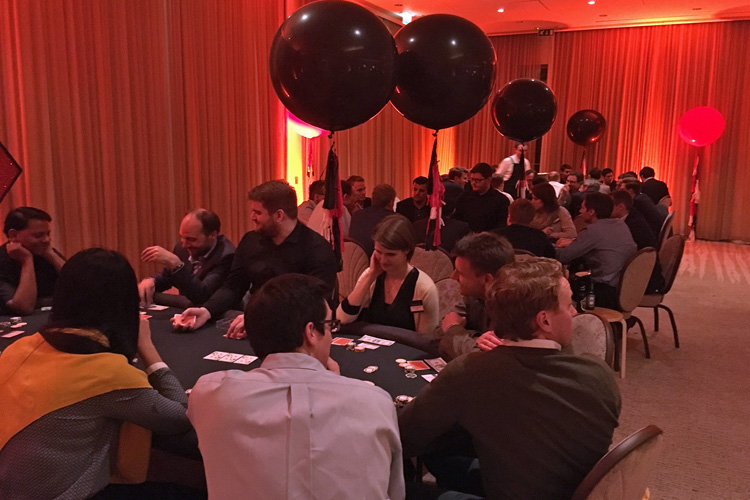
The same principle applies to a fun casino. Roulette is easy to watch between spins, blackjack tends to suit shorter visits and poker gives guests more reason to sit down for a while. If the tables will run alongside a longer reception, people can spread their visits across the evening. For a short post-dinner slot with several games in demand, compare the Christmas casino packages and discuss table numbers alongside the playing time.
Decide Where the Next Part of the Party Starts
A running order should describe the transition as well as the timings. If the dinner finishes in a ballroom and the games are in an adjoining room, decide who will open the doors and let guests know that the activities are ready. If dinner, dancing and games share one room, ask the venue how guests will move between them and whether any furniture needs to be cleared first.
Walk through this with the venue before the day. The quickest route from the dining tables may lead straight through the space where people will be watching an air hockey match or waiting to use a simulator. Moving a game or opening a second route can make the switch feel easier. If you haven’t chosen a room yet, the London Convention Bureau’s venue finder can help you look for spaces that suit the format.
Give Suppliers the Same Version of the Schedule
Have one running order that includes the venue, caterer, host, DJ and entertainment team. Give each person a named point of contact and say who calls each transition. On the day, the person presenting the awards may have a good view of when guests are ready to move, while the venue coordinator knows whether the next room is open. Agree how those two people will pass the cue.
Include the practical details each supplier will need, such as the access point, room name, setup window and collection arrangements. If the exact entertainment start time depends on the meal, include the estimated time and the cue. For example, the schedule might say the casino is due to open at 9 pm, on the organiser’s signal after the final award. Both pieces of information help people plan their work.
See How the Timings Might Work for a Dinner and Games Night
For a dinner-led event, guests might arrive from 6.30 pm for drinks and a few rounds on the arcade machines. Ask everyone to take their seats at 7.15 pm, serve dinner from 7.30 pm and hold awards at 8.45 pm. Open the games area around 9.15 pm on the organiser’s cue, with dancing starting later for anyone who wants to stay. Confirm those timings with the venue and catering team before putting them on an invitation.
For a reception with food stations, it may make more sense to open most of the entertainment when guests arrive and keep it running. Add one scheduled moment for a welcome, a team challenge or a short thank-you. Guests can spend the evening catching up and take part when it suits them. This naturally gives more people time to try activities that have limited places at any one moment.
Give the Evening a Clear Finish
Decide whether the entertainment will close with a final challenge, a last round at the tables or a simple announcement. If you’re running a leaderboard, schedule the result while the people who took part are still there. Ask the host or DJ to give guests a short cue before the final round so they know when to make their way over.
If you’re planning an office party in London, share your venue, rough schedule and guest numbers with Viva Vegas. We can help you choose Christmas party entertainment for your London venue and discuss when each activity would work best.